The Great Gatsby, an adaptation by Erin Shields, Citadel Theatre. 2-26-2027 poster image supplied.

Popcorn Falls, Teatro Live! 2026-2027 season. Poster image supplied
By Liz Nicholls, 12thnight.ca
Hey Edmonton, it’s time to come out and play!
The new theatre season is starting. And it enters buoyed by cheering news from our grand-slam summer theatre festival: the 45th annual Fringe sold a heart-lifting 142,000 tickets, on the rise since the pandemic, to its 209 shows.

To help support 12thnight.ca YEG theatre coverage, click here.
That welcome update about our enthusiasm for the live and in-person comes after another tough year of ingenuity-testing creativity and red-alert fund-raising, for Edmonton artists and companies, struggling with rising costs, frozen or reduced funding, dwindling sponsorships.
The theatre landscape in Edmonton is changing contours in a dramatic way. The new season is happening with a mass (a burst? a battalion? a flight?) of new artistic directors and producers — Lana Michelle Hughes at Shadow, Farren Timoteo at Teatro Live!, Jenna Rodgers at Theatre Network, Ellen Chorley at Alberta Musical Theatre, Brett Dahl at Concrete, Rainier Pearl-Styles at Common Ground Arts, Louise Casemore at Alberta Playwrights Network. It comes with disturbing news from venerable Workshop West Playwrights Theatre: the sudden, publicly unexplained, departure of artistic producer Heather Inglis at the end of this past season of Canadian play premieres. The announcement of an upcoming 48th Workshop West season by “an interim artistic programming committee” is coming Sept. 14.
New artistic directors, new plays (by Louise Casemore, Trevor Schmidt, Erin Shields, Alexandra Lainfiesta, and others), new musicals, new partnerships. At cash-strapped 52-year-old Theatre Network, the trio of productions in their ‘Roxy Remixed’ season (read about it here), are basically presentations of work from other theatre companies: Canmore-based Carter-Ryan Theatre (Oh, Anne!, look for a 12thnight.ca advance feature to come), Theatre Yes (an original “rock ’n’ roll panto” Jack and the Beanstalk), and SkirtsAfire Festival and Ruby Slippers Productions (Bella Luz).
There’s even a new festival — actually an old one, magically back from the Great Beyond. Fringe artistic director Murray Utas has revived Chinook Fest, the long-defunct winter theatre festival. It returns in February, with a lineup that so far includes Michelle Thrush’s Inner Elder and Ian Coyote’s Playlist.
Speaking as we are of clues for the future, rehearsals are in progress at the Citadel for Murder On The Orient Express (opening Sept. 24). Broadway Across Canada is bringing the “Shakespeare-adjacent” West End/ Broadway hit & Juliet to the Jube (Sept 22-27).
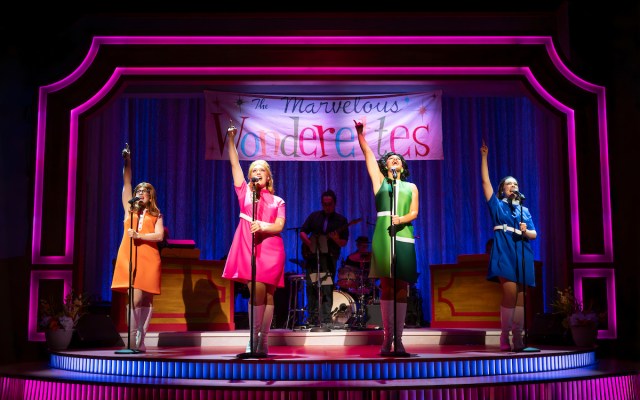
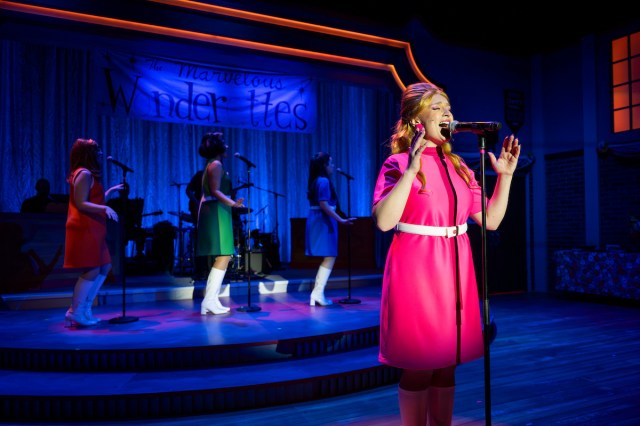
But first, Alberta Musical Theatre, now under Chorley’s artistic directorship, brings Rumpelstiltskin, pre-tour, to the Varscona for two weekends (Sept. 11 to 13 and Sept. 19 and 20). And the new season starts this very week, with Kate Ryan’s production of the musical The Marvelous Wonderettes: Dream On at the Mayfield, directed by Julie Tomaino. Check out the rest of the Mayfield season in the 12thnight preview here.
Meanwhile, to whet your appetite, here are a dozen (OK, a baker’s dozen) intriguing prospects to consider for the upcoming season, in no particular order.
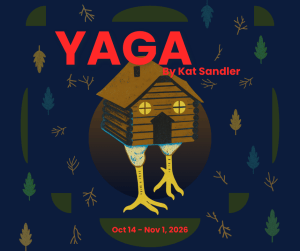
Yaga by Kat Sandler, the upcoming Shadow Theatre season-opener. Graphic supplied.
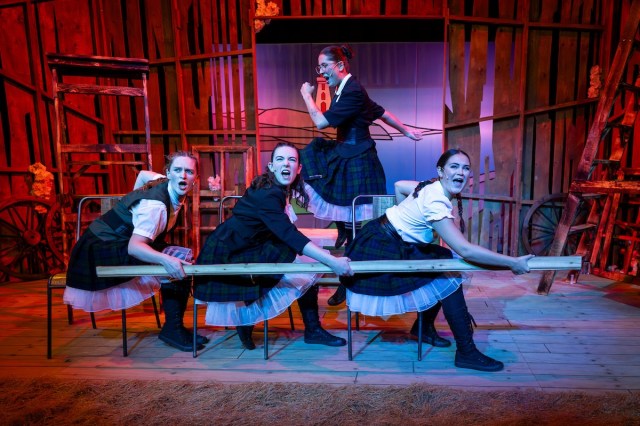
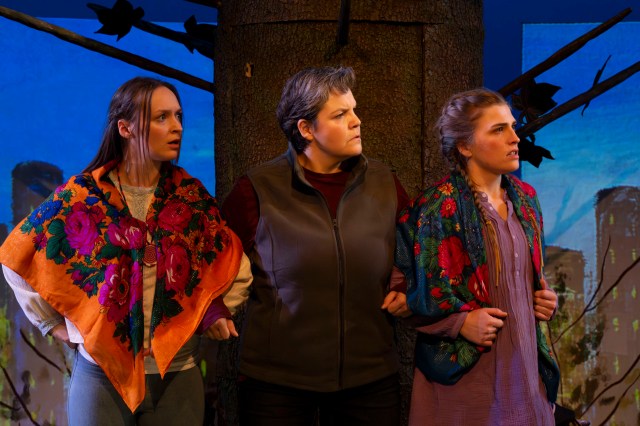
Yaga. The Canadian playwriting star Kat Sandler (The Candidate, The Party, Wildwoman, Punch Up), whose muse runs to funny, dark comedy, re-imagines, as a witty feminist horror thriller, the misogynist folk mythology of the wicked old crone who lives in a hut with chicken legs. Lana Michelle Hughes’ Shadow Theatre production launches her first season as artistic director (Oct. 14 to Nov. 1). Check out the rest of Hughes’ Shadow season in the 12thnight preview here.
The Extractionist. The heroine of this 2021 “neon-noir thriller” by Calgary-based playwright Michaela Jeffery (WROL, The Listening Room) is an experienced extractionist” (nothing to do with dentistry, thank god!). She extracts desperate people out of cults and de-programs them. Which is the portal into a shadow world of powerful, dangerous manipulators, a fascinating, shivery premise. And The Extractionist will have two Edmonton theatre productions this season, one at the U of A’s Studio Theatre (Dec. 3 to 12) and the other at Walterdale, Edmonton’s venerable community theatre (April 21 to May 1).
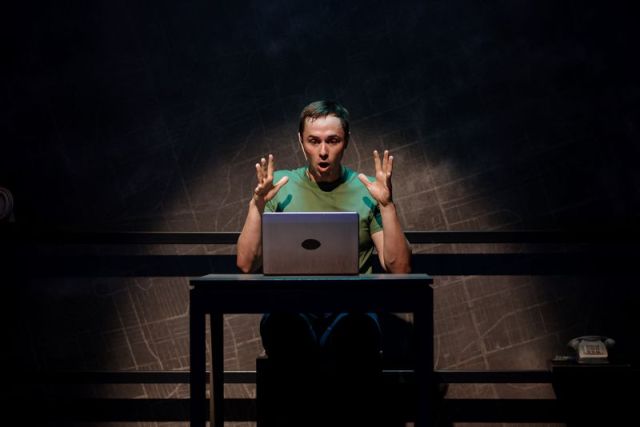
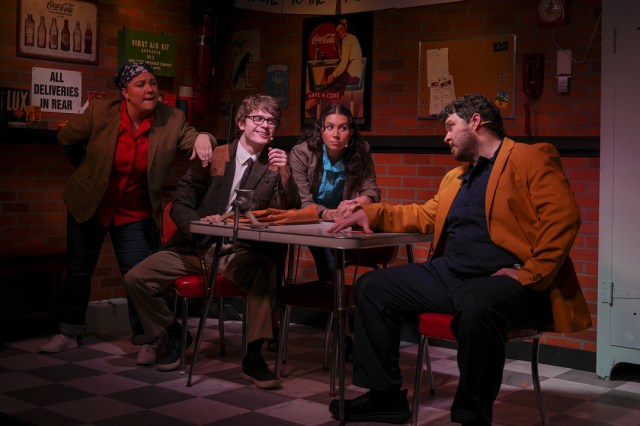
Popcorn Falls. How can you not warm to a play in which live theatre, careening through the intersection where egos collide, saves the day? In James Hinton’s Off-Broadway comedy, re-located to Alberta, a town on the skids can only be rescued from oblivion by putting on a play. Hey, it could happen. And here’s fun: everyone in town is played by two actors, Teatro Live!’s new artistic director Farren Timoteo and Garett Ross. Ryan Parker, a top-drawer comic actor and theatre photographer, makes his directing debut in the Teatro Live! production (Feb. 18 to March 7) at the Varscona. Check out Timoteo’s whole Teatro season in the 12thnight preview here.

Bella Luz by Alexandra Lainfiesta, a SkirtsAfire Fest/ Ruby Slippers co-production presented in association with Theatre Network. Image by Brianne Jang.
Bella Luz. This new play by Guatemalan actor/playwright Alexandra Lainfiesta is set in Canada, in Guatemala, and in a psychedelic game show world where the prize is … permanent residency. Fantasy and magic realism mingle in an unstable world where home is an elusive shangri-la. Theatre Network’s new artistic director Jenna Rodgers directs a cast of five in the SkirtsAfire Festival/ Ruby Slippers production that runs at the Roxy Theatre March 4 to 14. Lainfiesta is clearly an artist on a roll: her bilingual solo play Chula, premieres in the Citadel’s HighWire Series April 17 to May 9. Read about Rodgers and her whole Theatre Network season in the 12thnight preview here.
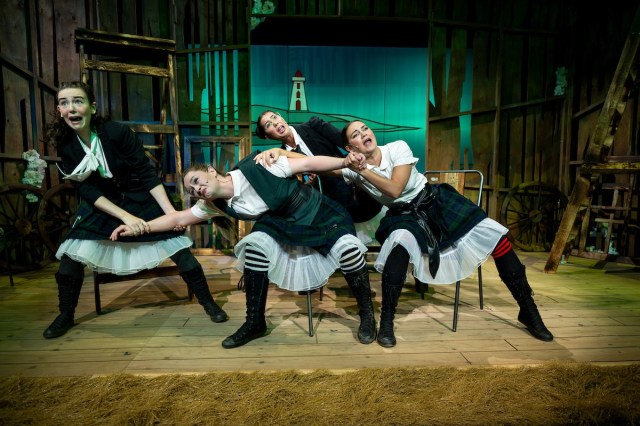
The Great Gatsby. F. Scott Fitzgerald’s great Jazz Age novel, hauntingly tragic, has found its way before now into plays, films, television series, musicals, an opera, a video game — and has often lost its heart there, in empty spectacle. Now the Citadel has unleashed the impressive theatrical pizzaz and savvy of Canadian playwright Erin Shield — an expert on adapting classics through a contemporary feminist glass (Jane Eyre, Ransacking Troy, Queen Lear) — on a new stage version. And Daryl Cloran’s premiere production (Oct. 31 to Nov. 22) promises a theatrical splash: Jay Gatsby’s glittering champagne bash, and a live onstage jazz band. Check out the entire Citadel season in the 12thnight preview here.
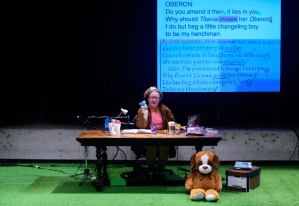
i am your spaniel; or, A Midsummer Night’s Dream by William Shakespeare by Gislina Patterson. Common Ground Arts, Prairie Mainstage Series. Image supplied
i am your spaniel; or, A Midsummer Night’s Dream by William Shakespeare by Gillian Patterson. The second offering in Common Ground Arts’ Prairie MainStage Series (April 29 to May 7), from Winnipeg’s hot We Quit Theatre duo (“We love to quit. We always do, and never will.”), is the season’s only “drag performance lecture.” It may claim exclusive proprietorship of a hitherto unoccupied niche in Shakespearean scholarship (and Canadian theatre). This begins in textual analysis of Shakespeare’s First Folio manuscript of Shakespeare’s most widely performed comedy, and moves right along to such theatrical accoutrements as found object puppetry, original music, and “reenactments.” Tantalizing, right?
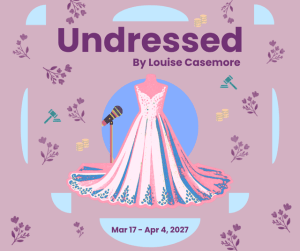
Undressed by Louise Casemore, Shadow Theatre upcoming. Graphic supplied
Undressed. The concept of this multiple-character solo creation (finally onstage here, March 17 to April 4 in the Shadow Theatre season) is nothing if not evocative. The adventurous theatre artist Louise Casemore (OCD, Lucky Charm), who thrives on audiences interaction, has created an onstage auction of used wedding dresses (heart-stabbing price tags, lace overlay of memories). And she transforms into the people who wore them.
Jack and the Beanstalk. Edmonton used to have pantos, annual iterations of one of Britain’s looniest, most riotous exports (at least as mad as Marmite, Fawlty Towers, and Twiglets). Now, at long last, we again have one to call our own, a “Canada’s first rock ‘n’ roll pantomime,” thanks to Theatre Yes’s Ruth Alexander and Nikki Hulowski, and Theatre Network where Jack and the Beanstalk hits the stage Nov. 29 to Dec. 20, crammed with sneaky local references, terrible puns, and an open invitation for the audience to hoot and holler. And there’s this: the eight actor/musicians in the cast actually play all the instruments, from a 22-song jukebox that starts in the ‘70s and moves on to the present. Check out the entire Theatre Network season here.
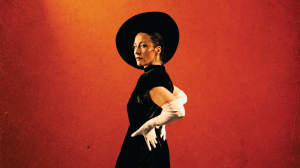
The Glittering Heart, revived in the 2026-27 Teatro Live! season. Poster image supplied.
The Glittering Heart. Teatro Live!’s 45th anniversary season includes a comedy by resident playwright Stewart Lemoine that had a brief premiere run at the Fringe 36 summers ago — and has never been revived, till now (May 27 to June 13). The startling, empowering weirdness of its premise, a journey of self-discovery, is still striking. Over dinner one night in 1959, a Winnipeg wife announces to her husband she’s leaving him to move to Venice and live an extraordinary life. The characters include a famous opera singer and a conductor. And Lemoine’s four-member cast includes veteran Teatro stars Belinda Cornish and Mathew Hulshof, with new(ish)comers Bella King and Aidan Laudersmith. Check out the entire Teatro Live! season here.
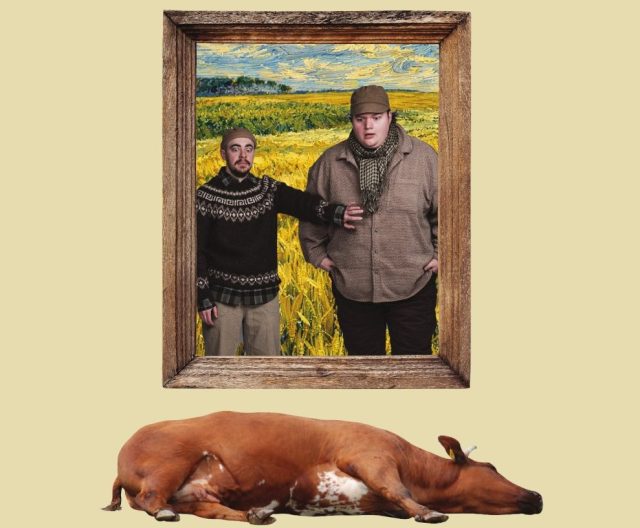
Émanuel Dubbeldam and Michael Watt in Milked by Simon Longman, Northern Light Theatre. Photo supplied
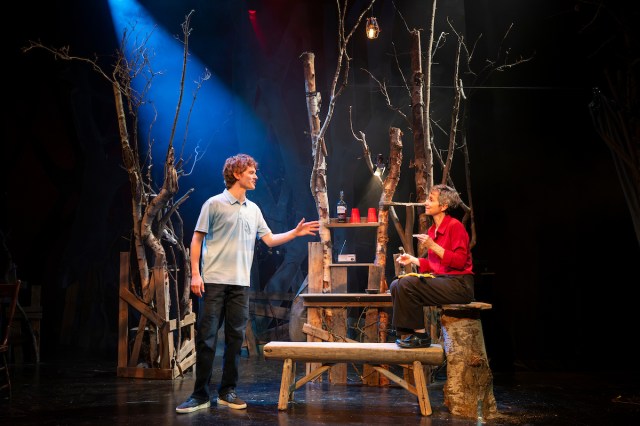
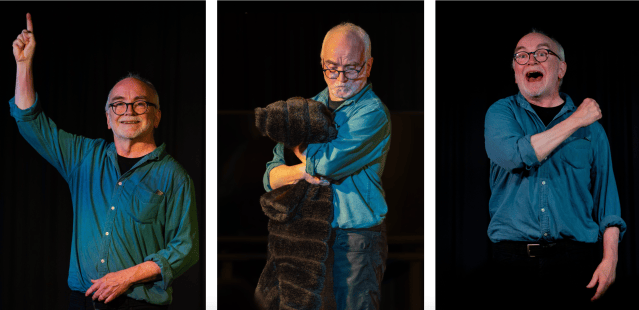
Milked. What makes this 2015 play by the English writer Simon Longman the most intriguingly unexpected offering in Northern Light Theatre’s upcoming 51st season? Milked is rural, for one thing, and it involves a dying cow in a field, for another. Two best friends, adrift in their early 20s, are stalled, struggling to find a foothold (or launch a career, or find a job). And now they have a more immediate crisis. Trevor Schmidt’s production (the North American premiere by the way, which Schmidt re-locates to the countryside near Red Deer) stars two of Edmonton’s hottest young actors Émanuel Dubbeldam and Michael Watt. Check out the rest of the Northern Light season in this 12thnight preview here.

Fun Home, NUOVA Vocal Arts. Poster image supplied.
Fun Home. NUOVA Vocal Arts, dedicated to training and showcasing emerging Canadian artists alongside experienced pros, tackles the beautifully off-centre and humane, moving and funny musical, based on the best-selling graphic novel memoir by American cartoonist Alison Bechdel. A 43-year-old revisits her past, her younger selves and her family, and makes discoveries about her father (played by the charismatic Doug Mertz) and her own sexuality. Benjamin Smith’s production (musical director Simon Abbott) at the Westbury Theatre in the Fringe Arts Barns, gets four performances Oct. 1 to 4.

Emma, starring Dayna Lea Hoffmann, premiering in the 2026-27 Teatro Live! season. Poster image supplied
Edmonton loves Jane. Witness a veritable outbreak of Jane Austen adaptations this season. At the Citadel, Daryl Cloran collaborates with actor/playwright Jessica B. Hill, who starred in Cloran’s playfully theatrical Stratford production last summer of Sense and Sensibility (an adaptation by American playwright Kate Hamill). Cloran and Hill have co-created their own six-actor adaptation of Austen’s first novel. Teatro Live! has commissioned a six-actor adaptation of Austen’s 1816 sharp-eyed sparkler Emma from Calgary-based Camille Pavlenko. Dayna Lea Hoffmann stars in Farren Timoteo’s production July 8 to 25. At Concordia University, it’s Katherine Koller’s original adaptation of Persuasion Nov. 5 to 8. At Walterdale Dec. 2 to 12, it’s an extrapolation from Pride and Prejudice, Miss Bennet: Christmas at Pemberley.
And, wait … MacEwan Theatre Arts revisits the signature Catalyst musical Hunchback (originally commissioned by the Citadel in 2011) with its wildly imaginative, boldly physical storytelling of Victor Hugo’s Romantic Gothic doorstopper. Jonathan Christenson returns to his creation to direct (Nov. 25 to 29).